The AI Control Gap
AI governance is becoming too small for the risks it is meant to manage. The real challenge is no longer responsible AI use, but whether organizations can still see, control, explain and stop the systems shaping their data, decisions, costs and dependencies.
Europe Does Not Become Sovereign Because Its Cloud Is European
Europe will not become digitally sovereign by changing the flag on its cloud provider. Real sovereignty means retaining control over identities, keys, data, operations, resilience and exit when technology, suppliers or geopolitics fail.
AI Compliance Is Not the Same as AI Control
Policies, registers and committees are necessary. But they do not prove control. AI governance becomes real only when organizations can observe what changes, detect what goes wrong, intervene quickly and explain what happened after the fact.
Your CISO Has Eyes and Ears. Your AI Officer Probably Does Not.
AI governance cannot rely on declarations alone. While the AI Officer coordinates policy and accountability, the CISO sees operational reality through telemetry, detection and incident response. Without security signals, governance becomes paper-based trust.
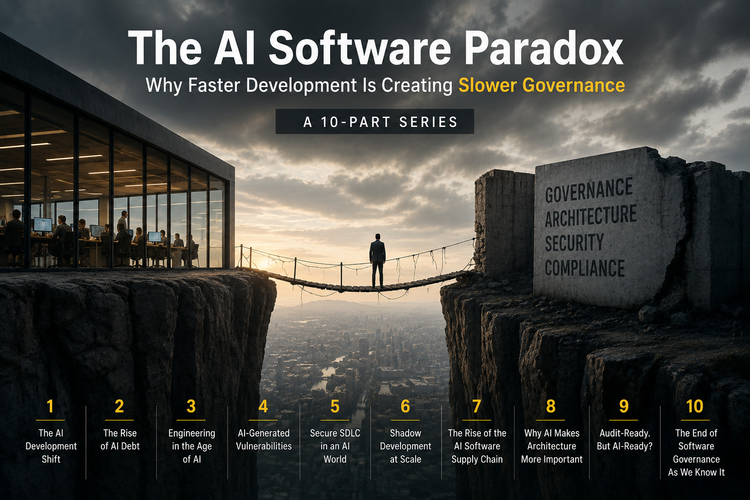
The AI Software Paradox Series
Artificial Intelligence is accelerating software creation like never before. But while development moves at machine speed, governance, architecture, and security remain human. This series explores why the AI era’s greatest challenge is retaining control over what gets built.
The Rise of the AI Software Supply Chain
Organizations spent years securing software supply chains. AI is creating a new challenge: governing the systems that generate software itself. Every generated line of code inherits assumptions, decisions, and risks from sources nobody can fully trace.