DEF CON 34 — What CISOs Should Take Away From the Hacker’s View of the Future
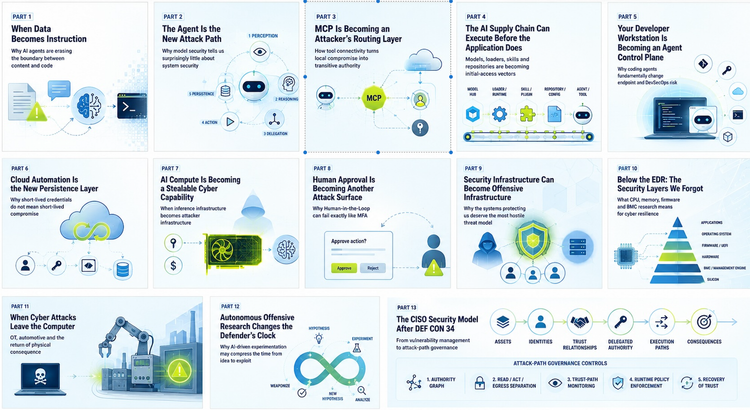
DEF CON 34 reveals a fundamental shift in cybersecurity: attackers increasingly exploit relationships, not isolated assets. This 13-part CISO series explores AI agents, MCP, identity, automation and the rise of authority-path governance.
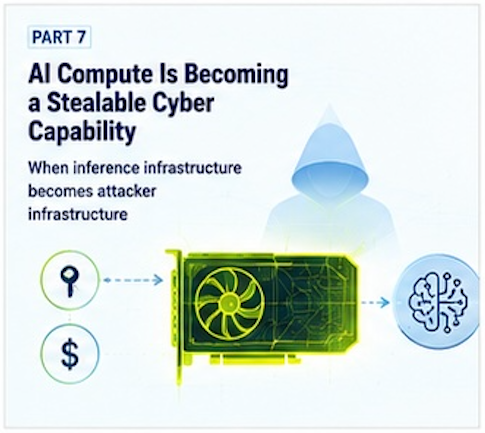
Part 7 — AI Compute Is Becoming a Stealable Cyber Capability
From cryptojacking to inferencejacking: attackers can turn exposed AI infrastructure into reconnaissance, reasoning and attack capability. For CISOs, AI usage telemetry is becoming security telemetry—and inference itself a cyber asset worth protecting.
SAP Is Not a Black Box Anymore — The CISO Needs to See Inside
SAP is no longer a security black box. Sentinel, Defender and Onapsis can make SAP risk visible — but only if CISOs connect monitoring, detection and SAP-specific intelligence into one continuous assurance model.
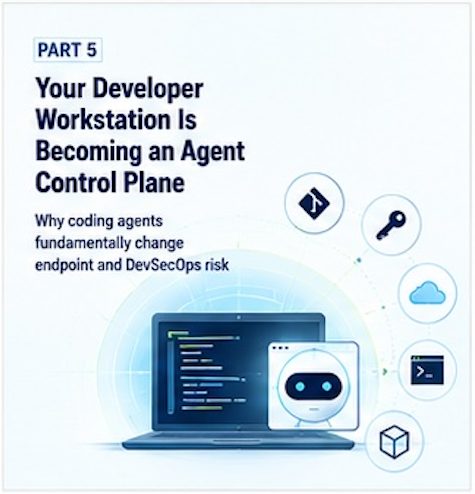
Part 5 — Your Developer Workstation Is Becoming an Agent Control Plane
Developer workstations are becoming agent control planes. Coding agents inherit identities, tools and authority—turning trusted developer environments into a new enterprise attack path.
Part 3 — MCP Is Becoming an Attacker’s Routing Layer
An AI agent’s real privilege extends far beyond its IAM permissions. MCP, managed identities and connected services create transitive authority paths that attackers can exploit—turning tool connectivity into a new routing layer for enterprise privilege.
Cloud Governance Is No Longer About Your Organization
Cloud governance has fundamentally changed. In the cloud, security depends on controls shared across customers, providers and partners. Boards that audit only their own governance may overlook the real question: Who governs the entire control ecosystem?
AI Attacks in SAP RISE: The Visibility Problem Inside the Managed Cloud
SAP RISE changes who operates your ERP—but not who is accountable for its security. AI-driven attacks exploit fragmented visibility across cloud providers, identities, APIs, and contracts. The biggest detection gap may not be technical. It may already be written into your RISE agreement.