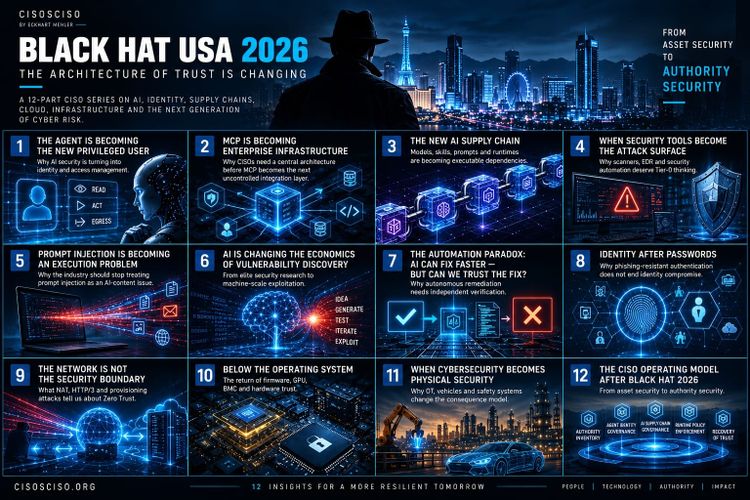
Black Hat USA 2026 — The Architecture of Trust Is Changing
Black Hat USA 2026 points to a fundamental shift in cybersecurity: from protecting assets to governing authority. Across AI agents, MCP, identity, supply chains, cloud, hardware and OT, this 12-part CISO series explores how the architecture of trust is changing.
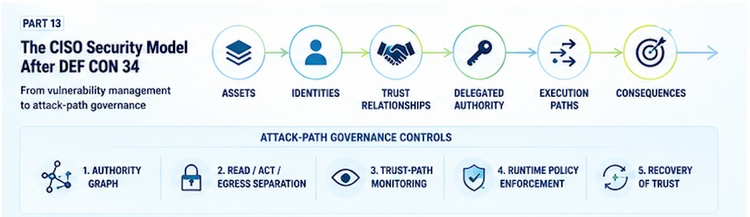
Part 13 — The CISO Security Model After DEF CON 34
DEF CON 34 exposed a fundamental shift: attackers increasingly exploit relationships, not isolated components. CISOs must move beyond assets and vulnerabilities toward governing authority paths—who can instruct, authenticate, invoke and ultimately cause what to happen.
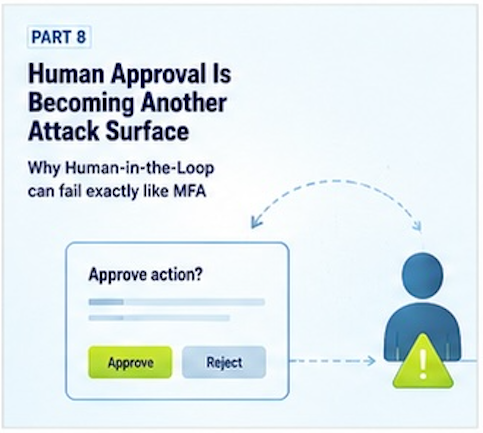
Part 8 — Human Approval Is Becoming Another Attack Surface
Human-in-the-Loop is not automatically a security control. When approvals become routine, humans stop verifying consequences and start clearing friction. Agentic AI may turn approval fatigue into the next MFA fatigue.
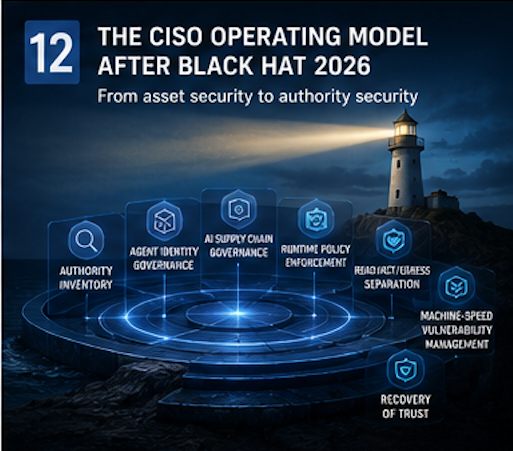
The CISO Operating Model After Black Hat 2026
Black Hat USA 2026 points to a deeper shift in security leadership: the CISO must move beyond protecting systems toward governing delegated authority — who can act, what they can cause, under which constraints, and with what consequence.
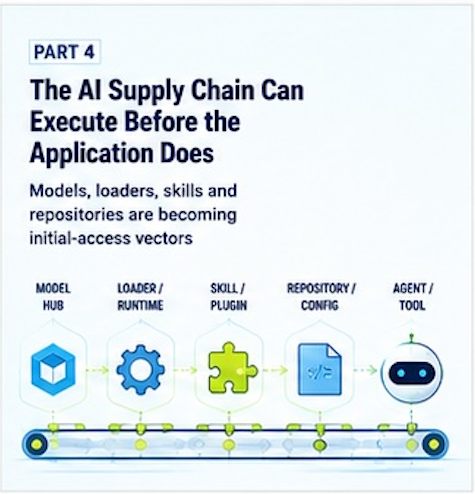
Part 4 — The AI Supply Chain Can Execute Before the Application Does
AI artifacts are no longer passive data. DEF CON 34 shows how models, Skills, repositories and loaders can become execution paths — forcing CISOs to rethink supply-chain security, provenance and runtime authority.
Part 3 — MCP Is Becoming an Attacker’s Routing Layer
An AI agent’s real privilege extends far beyond its IAM permissions. MCP, managed identities and connected services create transitive authority paths that attackers can exploit—turning tool connectivity into a new routing layer for enterprise privilege.
Claude Broke Into Real Systems During Cybersecurity Tests. The Real Failure Was Control.
Claude compromised three organizations after a test environment was mistakenly left online. The lesson for CISOs: an AI agent needs no malicious intent to cause harm—only an objective, excessive reach, and weak controls.