The New AI Supply Chain
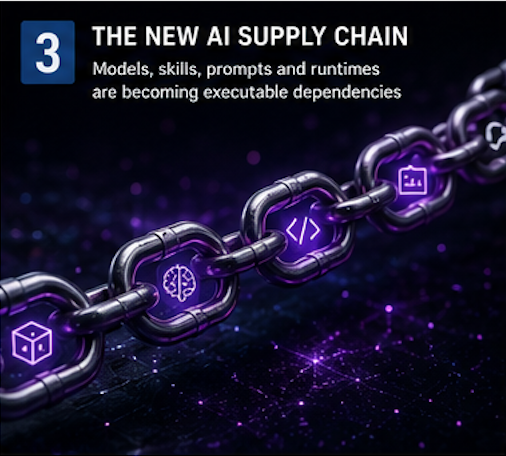
The AI supply chain no longer delivers only software. Models, prompts, skills, MCP servers and runtimes can all shape execution. CISOs must start governing not only executable code, but executable meaning.
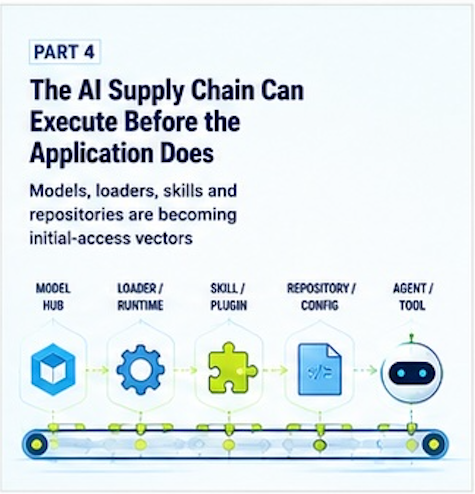
The AI Supply Chain Can Execute Before the Application Does
AI artifacts are no longer passive data. DEF CON 34 shows how models, Skills, repositories and loaders can become execution paths — forcing CISOs to rethink supply-chain security, provenance and runtime authority.
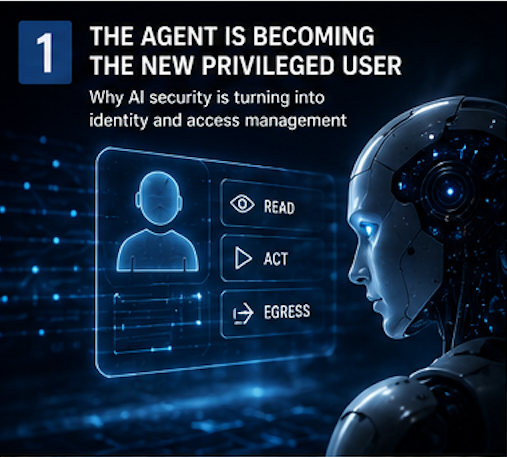
The Agent Is Becoming the New Privileged User
AI agents are becoming a new privileged identity class. The real security question is no longer what AI can know — but what it is authorized to do, through whose identity, and with what consequences.
MCP Is Becoming an Attacker’s Routing Layer
An AI agent’s real privilege extends far beyond its IAM permissions. MCP, managed identities and connected services create transitive authority paths that attackers can exploit—turning tool connectivity into a new routing layer for enterprise privilege.
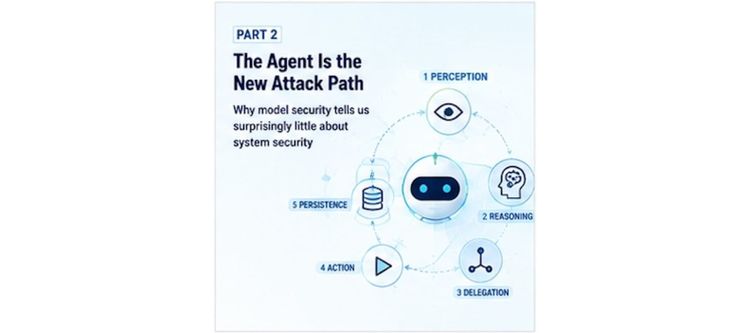
The Agent Is the New Attack Path
A safe model does not imply a safe agent. Agentic AI shifts the security problem from jailbreaks to authority: can an attacker make the system perform an authorized action for an unauthorized reason?
Claude Broke Into Real Systems During Cybersecurity Tests. The Real Failure Was Control.
Claude compromised three organizations after a test environment was mistakenly left online. The lesson for CISOs: an AI agent needs no malicious intent to cause harm—only an objective, excessive reach, and weak controls.
AI-Driven Attacks: Why the Existing Security Architecture Will Not Be Enough
AI is not simply making attacks faster. It is changing how they adapt, scale and hide inside legitimate business activity. The next detection gap is no longer technical alone—it is contextual. This series explores what CISOs must rethink before autonomous attackers arrive.