From IT Security Manager to Trusted Strategic Advisor: The Career Shift Every CISO Must Make
By Eckhart Mehler for CISOsCISO — a perspective on cybersecurity leadership, governance and the decisions that determine whether organizations retain control.
There is a moment in many cybersecurity careers when technical excellence is no longer enough.
For years, this excellence may have been the foundation of credibility. You understood systems. You solved incidents. You built controls. You managed vulnerabilities. You explained risks. You kept infrastructure running and protected the organization from threats most people never saw.
That work matters.
It remains the foundation of every serious cybersecurity career.
But at some point, the expectations change.
The organization no longer needs only someone who understands firewalls, identity systems, endpoint protection, cloud configurations, audit findings, and incident response processes. It needs someone who can explain why cybersecurity matters to strategy, resilience, trust, growth, regulation, reputation, and executive accountability.
That is the transition from IT Security Manager to CISO.
And it is much more than a promotion.
It is a change in identity.
The IT Security Manager protects systems.
The strategic CISO protects the organization’s ability to operate, decide, transform, and be trusted.
That shift requires more than technical knowledge. It requires business thinking, risk judgment, executive presence, communication discipline, political intelligence, and the ability to build trust across functions that do not naturally speak the language of cybersecurity.
The future CISO is not simply the best technical expert in the room.
The future CISO is the person who can turn cybersecurity into a business conversation without weakening its substance.
The Career Trap of Technical Credibility
Many security leaders begin their careers by becoming technically indispensable.
They know the systems. They understand the incidents. They can explain why a vulnerability matters. They know how attackers behave. They know how controls fail. They can challenge vendors, guide engineers, support audits, and calm people during a crisis.
This creates credibility.
But it can also become a trap.
The stronger your technical reputation becomes, the more the organization may continue to see you as a technical problem-solver rather than a strategic advisor.
You are invited when there is a security issue.
You are consulted when there is an incident.
You are asked for controls, exceptions, assessments, and approvals.
But you may not be included early enough when business strategy is shaped, when technology platforms are selected, when outsourcing models are designed, when new digital products are planned, or when executives discuss strategic risk.
This is the ceiling many IT Security Managers encounter.
They are respected.
But they are not yet trusted as strategic advisors.
The difference is subtle but decisive.
Respect is often based on expertise.
Trust at executive level is based on judgment.
Why the CISO Role Has Changed
The CISO role has changed because cybersecurity itself has changed.
Security is no longer limited to protecting infrastructure. It now touches almost every major transformation of the enterprise: cloud adoption, artificial intelligence, data governance, digital platforms, supplier ecosystems, regulatory exposure, operational resilience, geopolitical dependency, and public trust.
A weak cybersecurity posture can delay transformation.
A strong one can enable it.
A poorly governed cloud strategy can create lock-in, sovereignty concerns, and resilience gaps.
A well-governed one can accelerate business capability.
An unmanaged AI deployment can create confidentiality, integrity, compliance, and trust risks.
A responsibly governed AI strategy can improve productivity while protecting the organization’s values and obligations.
A security program focused only on compliance may pass audits while leaving real risks unresolved.
A strategic security program can connect controls, risks, business objectives, and executive decisions.
This is why the CISO can no longer remain a technical guardian at the edge of the business.
The CISO must become part of how the organization thinks about its future.
The First Shift: From Controls to Business Outcomes
The first career shift is learning to think in business outcomes.
This does not mean abandoning technical depth. It means translating technical reality into organizational relevance.
Executives do not primarily think in CVEs, SIEM alerts, encryption algorithms, IAM workflows, or endpoint telemetry. They think in revenue, trust, continuity, legal exposure, customer confidence, operational performance, transformation risk, political accountability, and strategic positioning.
The CISO must connect both worlds.
A vulnerability is not only a technical weakness.
It may represent a risk to a critical business process.
A missing backup capability is not only an IT gap.
It may threaten operational resilience, legal defensibility, and crisis recovery.
A weak identity governance model is not only an access control problem.
It may create fraud exposure, segregation-of-duties failures, audit findings, and insider risk.
A delayed security requirement is not only a project issue.
It may become a board-level accountability problem after an incident.
The strategic CISO learns to ask:
Which business objective does this risk affect?
Which decision needs to be made?
Who owns the risk?
What is the financial, operational, legal, or reputational impact?
What happens if we delay?
What trade-off are we really accepting?
This is the language of executive relevance.
The Second Shift: From Security Metrics to Decision Intelligence
Many security functions produce metrics.
Few produce decision intelligence.
There is a difference.
A dashboard may show the number of vulnerabilities, phishing simulations, overdue measures, incidents, training completion rates, open audit findings, or policy exceptions.
These numbers may be useful.
But they do not automatically help executives make better decisions.
A trusted CISO does not simply report security activity. They explain what the data means for the organization.
They distinguish between noise and signal.
They connect trends to risk.
They explain where management intervention is required.
They show which risks are increasing, which controls are failing, which dependencies are becoming critical, and which decisions can no longer be postponed.
For example, saying “we have 1,200 open vulnerabilities” may create concern but not clarity.
Saying “three of our most critical business applications depend on systems with repeatedly delayed patch cycles, and the residual risk is no longer compatible with our stated resilience objective” creates a decision point.
This is the difference between reporting and advising.
The CISO who wants to become a strategic advisor must learn to turn security information into executive judgment.
The Third Shift: From Expert Authority to Executive Influence
Technical experts are often trained to be right.
Strategic advisors must learn to be heard.
This is one of the hardest transitions in a CISO career.
In technical environments, strong arguments often win because they are precise, evidence-based, and logically correct. In executive environments, correctness is still important, but it is not enough.
Executives operate under competing priorities. Every function can argue that its risks are important. Finance sees budget pressure. Operations sees delivery pressure. Legal sees liability. HR sees people risk. IT sees complexity. Business units see customer commitments. Compliance sees obligations. The CISO enters a room full of legitimate concerns.
Influence requires understanding those concerns.
It requires timing.
It requires framing.
It requires knowing when to escalate, when to educate, when to negotiate, and when to insist.
A trusted strategic advisor does not merely say, “This is insecure.”
They explain:
What decision is required.
What options exist.
What risk each option carries.
What the recommended path is.
What the consequences of inaction are.
Where executive accountability begins.
This is not dilution of security.
It is leadership.
The Fourth Shift: From Compliance Function to Strategic Risk Partner
Many organizations still view cybersecurity primarily through the lens of compliance.
This is understandable. Regulations, certifications, audits, and contractual obligations matter. Standards such as ISO/IEC 27001 can provide structure, discipline, and accountability.
But compliance alone is not the same as security maturity.
A CISO who wants to be seen as a strategic advisor must respect compliance while moving beyond it.
The question is not only:
Are we compliant?
The stronger questions are:
Are we resilient?
Are we making informed risk decisions?
Are our controls effective in reality?
Do our security requirements shape transformation early enough?
Can we prove accountability after an incident?
Do we understand our critical dependencies?
Are we prepared for the risks created by our own strategy?
This is where the CISO becomes more than the owner of security documentation.
The CISO becomes a strategic risk partner.
The Fifth Shift: From Internal Operator to External Voice
Career advancement for CISOs increasingly includes external credibility.
This does not mean becoming a public influencer for its own sake. It means building a professional voice that demonstrates judgment, clarity, and relevance beyond the boundaries of the current organization.
Writing, speaking, participating in professional forums, contributing to industry discussions, and engaging with peers can strengthen a CISO’s ability to think and communicate strategically.
A strong external voice does several things.
It forces clarity.
It exposes the CISO to different perspectives.
It builds credibility with peers, recruiters, boards, and executives.
It demonstrates that the CISO can interpret cybersecurity in a broader business, regulatory, and societal context.
But external positioning must be handled carefully.
The most credible CISO brand is not built on fear, hype, or self-promotion.
It is built on substance.
The goal is not visibility alone.
The goal is trusted visibility.
Personal Brand Is Not Vanity
Some security leaders are uncomfortable with the idea of personal branding.
They associate it with superficial marketing.
That concern is understandable. Cybersecurity already has enough noise.
But personal brand, properly understood, is not vanity. It is reputation at scale.
It is what people associate with your judgment before you enter the room.
Are you seen as technical but narrow?
Reliable but reactive?
Strong in operations but weak in strategy?
Compliance-focused but not business-oriented?
Visionary but impractical?
Calm under pressure?
Capable of advising executives?
Able to connect technology, risk, governance, and business?
These perceptions influence career opportunities.
They influence whether you are invited into strategic discussions.
They influence whether boards, executive teams, and recruiters see you as a future CISO, a regional security lead, a group CISO, a board advisor, or a crisis leader.
The strategic CISO does not leave reputation entirely to chance.
They shape it through consistent behavior, communication, and contribution.
The Importance of Financial Literacy
One of the most underestimated skills in CISO career advancement is financial literacy.
Security leaders do not need to become CFOs.
But they must understand how investment decisions are made.
They must be able to explain cybersecurity in terms of cost, value, risk reduction, avoided loss, resilience, efficiency, regulatory exposure, insurance implications, and opportunity enablement.
A CISO who cannot explain why an investment matters in business terms will struggle to influence executive decisions.
This is especially true when budgets tighten.
Security leaders must be prepared to answer:
What happens if we do not invest?
Which risk is reduced?
How does this support business strategy?
What is the cost of delay?
Is this a regulatory necessity, a resilience requirement, or an efficiency improvement?
Can we sequence the investment?
What trade-offs are acceptable?
What trade-offs are irresponsible?
Financial literacy turns security from a demand into a business case.
Building Relationships Before You Need Them
Trusted advisors are not created during crises.
They are built through relationships before crises occur.
A CISO who only interacts with other executives when something is wrong will be seen as a messenger of problems. A CISO who regularly engages with finance, legal, operations, HR, procurement, communications, data protection, internal audit, and business leadership becomes part of the organization’s decision fabric.
This requires deliberate relationship-building.
Not political games.
Not superficial networking.
But serious engagement with the priorities of other functions.
What worries the CFO?
What keeps the COO awake?
What does legal fear after a breach?
What does HR need to protect employees?
What does procurement need to manage supplier risk?
What does communications need in a crisis?
What does the business need to move faster without creating unacceptable exposure?
When the CISO understands these perspectives, security advice becomes more relevant.
And relevance builds trust.
Learning to Speak Board Language
The board does not need a technical lecture.
It needs clarity on risk, accountability, resilience, and strategic exposure.
Many security leaders struggle here because they try to compress operational complexity into board presentations. They show too many metrics, too many projects, too many technical details, and too little decision relevance.
Board communication requires discipline.
A strong CISO board message usually answers a few essential questions:
What are our most important cyber risks?
How do these risks affect business objectives?
Are we within our risk appetite?
Where are we improving?
Where are we exposed?
Which decisions require executive or board attention?
What would we regret not doing if a serious incident occurred?
This is not simplification in the negative sense.
It is executive clarity.
The CISO who can communicate this way becomes more than a security function leader.
They become a strategic advisor.
Managing the Political Reality
Cybersecurity leadership is political.
This does not mean partisan or manipulative. It means that cybersecurity decisions affect power, budgets, timelines, accountability, priorities, and ownership.
A security requirement may delay a project.
A risk assessment may expose weak governance.
An audit finding may create management discomfort.
A cloud security decision may challenge a strategic vendor relationship.
An identity governance requirement may reveal excessive privileges among senior users.
An incident review may show that accountability was unclear.
The CISO must learn to navigate this reality without losing integrity.
This requires diplomacy.
The strategic CISO must be clear without being reckless.
Firm without being aggressive.
Constructive without being naïve.
Independent without becoming isolated.
This is one of the most important differences between a technical manager and an executive security leader.
The technical manager identifies the problem.
The strategic CISO creates the conditions for the organization to address it.
Seeking Mentorship and Sponsorship
Career advancement does not happen in isolation.
Security leaders need mentors, peers, and sponsors.
A mentor helps you think.
A sponsor creates opportunities.
A peer network challenges your assumptions.
Many aspiring CISOs focus only on technical development and certifications. These are useful, but they are not enough. To become a strategic advisor, you need exposure to people who already operate at that level.
Seek out executives who can explain how decisions are made.
Learn from experienced CISOs who have navigated crises, board relationships, regulatory pressure, and organizational politics.
Participate in trusted CISO communities.
Ask for feedback on your communication.
Observe how senior leaders frame trade-offs.
Career growth accelerates when learning is intentional.
Cross-Functional Experience Matters
Some of the best CISOs are not shaped only by security operations.
They understand governance, risk, compliance, privacy, business continuity, procurement, audit, enterprise architecture, crisis management, and transformation programs.
Cross-functional experience broadens judgment.
It helps the CISO understand that cybersecurity is not a standalone discipline. It is embedded in how the organization buys technology, manages data, designs processes, operates globally, responds to crises, and fulfills legal obligations.
An IT Security Manager who wants to grow should actively seek exposure beyond the security team.
Join risk committees.
Support data protection reviews.
Participate in supplier assessments.
Work with enterprise architecture.
Observe business continuity exercises.
Contribute to crisis simulations.
Understand internal audit.
Learn how strategic programs are governed.
This is how security becomes connected to the enterprise.
The Mindset Shift: From “My Controls” to “Our Decisions”
Perhaps the most important shift is psychological.
Many security managers think in terms of controls they own.
Strategic CISOs think in terms of decisions the organization must make.
This difference changes everything.
Instead of asking, “How do I enforce this security requirement?” the strategic CISO asks, “How do I help the organization understand the consequences of this choice?”
Instead of asking, “How do I get business units to comply?” the strategic CISO asks, “How do I embed security into the way decisions are made?”
Instead of asking, “How do I prove that security is important?” the strategic CISO asks, “How do I make risk visible at the right level before it becomes damage?”
This does not weaken the security role.
It strengthens it.
Because cybersecurity succeeds when it influences decisions before they become irreversible.
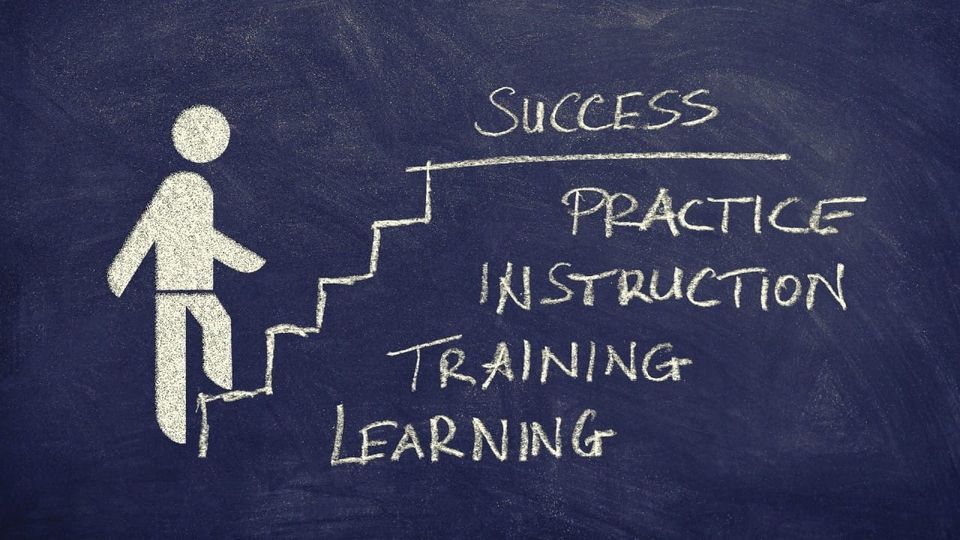
A Practical Career Development Path
For an IT Security Manager who wants to become a trusted strategic advisor, the path can be deliberate.
First, develop business understanding. Read the organization’s strategy, annual reports, risk reports, regulatory obligations, and transformation roadmaps. Identify where cybersecurity enables or constrains these objectives.
Second, improve risk communication. Practice translating technical findings into business impact, decision options, and residual risk.
Third, build executive relationships. Schedule regular conversations with finance, legal, operations, HR, procurement, compliance, privacy, and business leaders.
Fourth, seek cross-functional assignments. Get involved in transformation programs, cloud governance, AI initiatives, business continuity, crisis exercises, and supplier risk management.
Fifth, strengthen external credibility. Write, speak, participate in professional communities, and contribute substance to the cybersecurity leadership debate.
Sixth, invest in leadership development. Executive education, mentoring, coaching, and peer exchange can help close the gap between technical management and strategic leadership.
Seventh, learn to advise, not only report. Every security update should help someone make a better decision.
This path is not theoretical.
It is practical.
But it requires discipline.
Final Reflection
The transition from IT Security Manager to trusted strategic advisor is one of the most important career shifts in cybersecurity.
It is not about abandoning technical expertise.
It is about expanding its impact.
The modern CISO must understand systems, threats, controls, and incidents. But they must also understand strategy, risk, finance, regulation, human behavior, organizational politics, and executive decision-making.
The question is no longer whether the CISO can secure technology.
The question is whether the CISO can help the organization make better decisions in a world shaped by digital risk.
That is the real career advancement.
Not a new title.
Not a larger team.
Not a bigger budget.
But the moment when leadership stops seeing cybersecurity as a specialist function and starts seeing the CISO as a trusted advisor on the future of the organization.
For every aspiring CISO, that is the work.
To move from technical authority to strategic trust.
To move from reporting risk to shaping decisions.
To move from managing security to advising leadership.
And ultimately, to become the person the organization turns to not only when something goes wrong — but when something important is about to be decided.
Publication Note & Disclaimer
This article was originally published on LinkedIn on February 16, 2025 and may have been edited or updated for publication on this site.
It reflects my personal professional perspective and does not represent the official policy or position of my employer. Drafting and editorial refinement may have been supported by commercially available AI-assisted tools. The analysis, conclusions and final curation are entirely my own.
For information regarding image credits, copyrights, trademarks and other intellectual property rights, please refer to the Imprint.
Member discussion