Beyond the Breach Report: Why the Real Story Is Governance, Not AI

By Eckhart Mehler for CISOsCISO — a perspective on cybersecurity leadership, governance and the decisions that determine whether organizations retain control.
Every summer, the cybersecurity community waits for the latest Cost of a Data Breach Report. The numbers are discussed, charts are shared on social media, and headlines quickly emerge:
“Breach costs reached another record.”
“AI attacks increased dramatically.”
“Organizations should invest more in AI.”
The discussion often ends there.
That is a mistake.
The IBM Cost of a Data Breach Report 2026 is not simply another collection of breach statistics. It documents something far more significant: the beginning of a structural shift in cybersecurity economics. AI has fundamentally changed how attacks are prepared, executed and scaled. The consequences are no longer theoretical—they are measurable in financial losses, operational disruption and organizational resilience.
Yet the report also reveals something even more important.
The greatest weakness is not artificial intelligence itself.
It is governance.
AI Is Not the Story
Artificial intelligence dominates this year’s report for good reason. AI-assisted attacks have increased dramatically, AI-related breaches have become significantly more expensive and organizations increasingly recognize that traditional defensive approaches are under pressure.
However, if we stop reading at that point, we miss the report’s most valuable insight.
Repeatedly, the findings point toward failures that have little to do with algorithms:
- inadequate access management,
- insufficient governance,
- weak identity controls,
- fragmented visibility,
- inconsistent security architecture,
- organizational complexity.
These are not AI problems.
They are management problems.
Technology merely exposes them faster.
The Speed Gap
For years, cybersecurity has focused on improving detection and response.
Security Operations Centers became larger.
Threat intelligence became more sophisticated.
Automation improved analyst productivity.
But AI changes the equation.
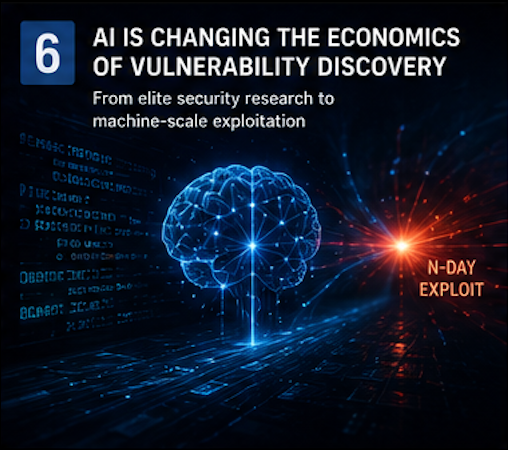
Attackers are no longer constrained by human speed. They can discover vulnerabilities faster, generate convincing phishing campaigns at scale, adapt malware automatically and exploit weaknesses before many organizations have even completed traditional risk assessments. The report highlights this acceleration and its direct financial impact.
Most organizations, however, still govern security through quarterly steering committees, annual policy reviews and manual approval processes.
This creates an increasingly dangerous imbalance.
Machine-speed attacks are confronting human-speed governance.
Governance Has Become a Security Control
One statistic deserves far more attention than the headlines it received.
Among organizations that experienced AI-related security incidents, the overwhelming majority lacked adequate AI access controls.
That finding changes the discussion entirely.
The challenge is not selecting the right foundation model.
It is ensuring that:
- identities are managed,
- permissions are enforced,
- AI deployments are approved,
- data remains protected,
- responsibilities are clearly assigned,
- monitoring exists before incidents occur.
These are classic governance disciplines.
Artificial intelligence simply raises the cost of neglecting them.
Security Is Becoming an Organizational Capability
For many years, cybersecurity investments concentrated on technical controls.
Firewalls.
Endpoint protection.
SIEM.
EDR.
XDR.
These technologies remain essential.
But the report demonstrates that organizations reducing breach costs consistently combine technology with organizational maturity. Identity management, DevSecOps, encryption, managed detection capabilities and integrated operational processes contribute to lower overall breach costs.
Technology still matters.
But technology without governance increasingly delivers diminishing returns.
The CISO’s Role Is Changing
This evolution also changes the expectations placed on the CISO.
Historically, CISOs were often measured by technical effectiveness:
- How many vulnerabilities exist?
- How many incidents occurred?
- How quickly were systems patched?
These questions remain important.
But they are no longer sufficient.
Boards increasingly expect answers to different questions:
- How resilient is the organization?
- How quickly can critical business services recover?
- Which governance decisions increase cyber risk?
- Which investments produce measurable risk reduction?
- Where is AI creating unmanaged exposure?
The modern CISO therefore becomes less of a technology specialist and more of an executive responsible for organizational resilience.
Cybersecurity is evolving into enterprise governance.
This Series
This series is not intended to summarize the IBM report.
The report already does that exceptionally well.
Instead, each article starts where the report ends.
We will examine what its findings mean for executive leadership, governance, architecture and the future role of the CISO.
Throughout the series we will address questions such as:
- Why has AI fundamentally changed cyber economics?
- Why is prevention becoming more valuable than detection?
- Why is identity replacing the traditional network perimeter?
- Why is Shadow AI repeating the mistakes of Shadow IT?
- Why must ISO/IEC 27001 evolve to address AI-native organizations?
- Why should boards discuss resilience instead of cybersecurity?
- What does the CISO of 2030 actually look like?
Our objective is not to predict the future.
It is to prepare organizations for it.
Because the organizations that will succeed over the next decade are unlikely to be those that simply deploy more AI.
They will be the organizations that learn to govern it.
Final Thought
The IBM Cost of a Data Breach Report 2026 documents an important transition.
Cybersecurity is no longer defined primarily by technical protection.
It is increasingly defined by organizational capability.
Artificial intelligence is accelerating attacks.
Governance determines whether organizations survive them.
That is the story this series will explore.
Publication Note & Disclaimer
This article provides security and governance analysis, not legal advice. Regulatory obligations must be assessed against the facts, jurisdictions, data types, and roles of the organizations involved.
This article reflects my personal professional perspective and does not represent the official policy or position of my employer. Drafting and editorial refinement may have been supported by commercially available AI-assisted tools. The analysis, conclusions and final curation are entirely my own.
For information regarding image credits, copyrights, trademarks and other intellectual property rights, please refer to the Imprint.
Member discussion